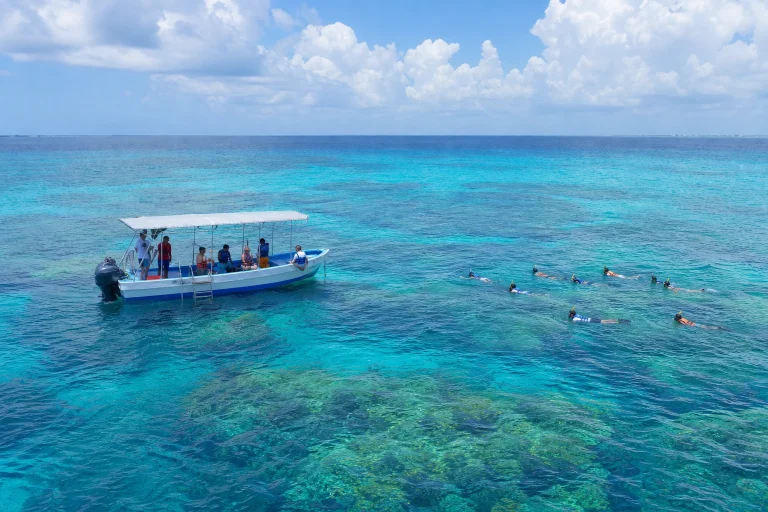
Best Cozumel Snorkeling Tours
Cozumel’s clearest snorkeling decision is not which company has the brightest sales page. It is which type of trip matches your available time, swimming comfort, group size, and interest in the protected southern reefs. Strong tours disclose their planned sites, departure marina, duration, inclusions, group size, and authorization for the national park. Those details matter more than a vague promise to visit the island’s “best” water.
- Choose a longer southern reef boat trip for the most reef-focused experience.
- Choose a short reef or glass-bottom outing when port time is limited.
- Confirm that the boat, captain or guide, and itinerary are authorized for the national park.
- Ask for the complete cost, including equipment, transportation, dock charges, and protected-area fees.
- Check boarding arrangements, swim requirements, and flotation support before booking for children or travelers with limited mobility.
- Build a generous return buffer if you are visiting Cozumel on a cruise.
There is no reliable, complete list in the available evidence that supports naming one provider as the island’s absolute best. Offers also change with sea conditions, vessel schedules, and park access. This guide therefore compares the most useful tour formats and shows you how to screen individual operators. That approach produces a better match than a fixed ranking that may be outdated before your mask stops fogging.

Cozumel Snorkeling Tour: Palancar, Columbia and El Cielo Reefs
Award Winning Snorkeling Trip! Set off for a great Adventure to the Caribbean and admire the Spectacular marine life on this awarded Cozumel Snorkeli...

El Cielo Cozumel Snorkeling trip by Catamaran
TRAVELER’S FAVORITE TRIP! Get in the mood for fun aboard your Catamaran in a fun sail to magnificent reefs and gr...

Official Chankanaab Park Admission with Snorkeling
Traveler’s Favorite Activity! Enter into the magnificent world of Chankanaab Adventure Park, Cozumel's main natur...

Official Chankanaab Park Admission and Snorkeling with Lunch
BEST VALUE PACKAGE! Enjoy some of the best snorkeling in Cozumel at Chankanaab Marine Park. Countless tropical fish...
The best Cozumel snorkeling tours by trip style
Most travelers should begin by separating boat tours entering the protected southern reef system from shore-snorkeling and beach-club visits. Cozumel Reefs National Park extends along the southern part of the island, beginning around kilometer 6 of the South Coastal Highway and continuing toward Punta Chiqueros on the east side. Snorkeling is among the visitor activities recognized there, but access comes with specific conservation rules.

| Tour style | Best for | Main tradeoff | Verify before booking |
|---|---|---|---|
| Longer multi-stop reef boat | Travelers prioritizing protected reef sites | More time committed to the excursion | Named sites, marina, duration, group size, authorization |
| Short reef or glass-bottom trip | Cruise visitors and tight schedules | Less time at individual sites | Return time, actual water time, harbor, transfers |
| Private charter | Families or groups wanting schedule control | Higher total booking cost | Maximum capacity, itinerary, fees, cancellation terms |
| Shore snorkeling or beach club | A flexible day without a longer boat ride | May not enter the southern reef system | Entry terms, equipment, water access, currents |
| Glass-bottom combination | Mixed groups with different swimming comfort | Viewing window does not guarantee easy boarding | Ladder, stairs, seating, flotation, restroom access |
Best overall: a longer southern reef boat tour
A longer multi-stop boat outing is the strongest choice when snorkeling is the main event of your day. One current commercial example advertises a roughly four-hour itinerary linking Palancar, Columbia, and El Cielo from Marina Asipona. Treat that as an example rather than an island-wide standard. Routes, stops, departure points, and durations vary, so look for a product description that names every planned site and explains how much time is spent in the water.
Palancar deserves particular attention because the name appears frequently in Cozumel tour listings. Before choosing a trip, compare the proposed stop with the practical details in a Palancar Reef snorkeling guide. A tour merely mentioning Palancar is less informative than one that states the route, expected water conditions, group format, and guide procedures. The operator should also explain whether the itinerary can change when conditions make another site more appropriate.
Best for cruise passengers: a shorter reef or glass-bottom outing
A compact excursion can make sense when your ship’s all-aboard time controls the day. One operator currently advertises a 1.5-hour glass-bottom and reef option from Caleta Harbor. That example shows how much shorter some trips can be, but it does not establish a standard duration. Confirm the meeting point, check-in time, transport in both directions, actual snorkeling time, and the operator’s plan for getting you back comfortably before departure.
Do not measure the buffer only from the advertised tour finish. Allow for unloading, gathering equipment, ground transportation, and possible traffic near port areas. The Cozumel Cruise Port Guide can help you understand the island’s cruise terminals and plan the land portion of the day. If an independent excursion runs late, the consequences can be serious, so ask how weather cancellations and schedule disruptions are handled before paying.
Best for privacy and flexibility: a private charter
Private charters can suit families, friends, and travelers who value a smaller social circle. They may offer more control over pacing, but “private” does not remove national park requirements or guarantee every requested stop. Ask for the vessel’s maximum capacity, shade, seating, restroom arrangements, guide-to-guest ratio, itinerary, and authorization. Confirm which decisions remain with the captain when sea conditions affect safety or comfort.
The total charter price is more useful than the per-person figure only after every inclusion is clear. Commercial listings observed during research advertised shared experiences and substantially more expensive private options, but those figures are volatile marketing prices rather than official rates. Request a written total in the stated currency and ask whether equipment, refreshments, transport, dock charges, and national park fees are included.

Cozumel ClearBoat Adventure with Snorkeling
Perfect For Families and Couples! Hope on aboard a unique experience in the only 100% transparent boat in the World...
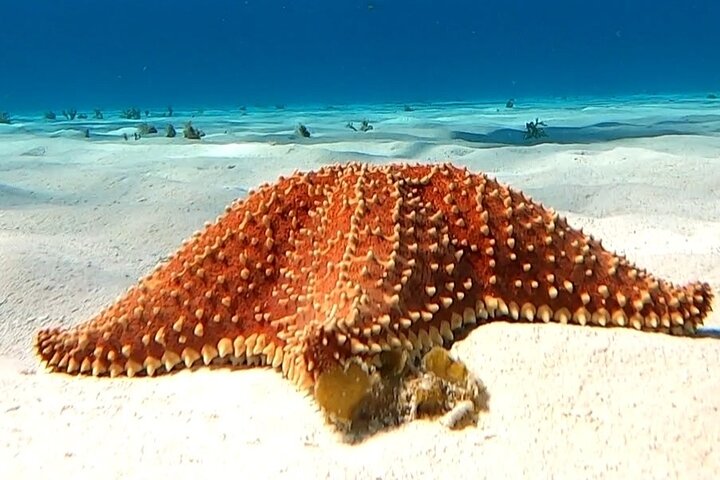
The Cozumel Turtle Sanctuary Snorkel Tour
We're known for operating the best all-inclusive snorkel experiences on the island of Cozumel.Traveling to some of t...

Exclusive Private Boat to El Cielo
Indulge in the exclusivity of a Private Boat tour to Cozumel’s most breathtaking destinations: El Cielo and the wo...
Best for an easygoing land day: shore snorkeling or a beach club
Shore snorkeling works well when you want flexible timing and fewer moving parts. It is a different product from a boat tour into the protected southern reef system, however. A beachfront venue may provide convenient water access, equipment, food, or seating, but its location and marine experience should not be treated as interchangeable with Palancar, Columbia, or another named boat stop.
Use a Cozumel Beach Clubs Guide to compare the island’s beach-club format before committing to a boat. Ask each venue about entry arrangements, rental equipment, lockers, steps or ladders, flotation devices, and the conditions immediately offshore. Never assume that shore access is suitable for a weak swimmer. Conditions and entry points differ, and the available evidence does not establish standardized supervision or accessibility.
Best for mixed swimming abilities: a glass-bottom combination
A glass-bottom component may let some guests spend less time in the water while remaining part of the outing. It does not prove that the vessel is accessible or that non-swimmers can safely snorkel. Boarding may still involve steps, a dock gap, or a ladder. Ask how passengers enter the boat and water, where they sit, what flotation is supplied, and whether a guest can remain aboard for the entire trip.
Best for travelers focused on El Cielo: an itinerary that names the stop
If El Cielo is your priority, choose a listing that names it rather than assuming every southern route goes there. Ask whether it is a primary stop, how the visit fits with reef snorkeling, and what happens if conditions alter the itinerary. The El Cielo Cozumel Snorkeling Guide offers focused planning context for this popular excursion area. A specific itinerary is still subject to the captain’s safety decisions and current access conditions.
How to evaluate a Cozumel snorkeling operator
A polished booking page can help you understand a product, but it does not replace direct confirmation. Start with authorization, then compare the route, vessel, group format, and complete cost. If you book through a reseller or a vendor near a cruise terminal, identify the company that will actually operate the boat. The reseller’s brand may not be the name painted on the vessel or used at the marina.
Ask about national park authorization first
CONANP instructs visitors to hire boats and guides authorized for the protected area. Ask the seller to confirm that the vessel, captain or guide, and intended itinerary are authorized for Cozumel Reefs National Park. This should be a non-negotiable screening question, especially when the seller is not the operator. The Cozumel Reefs National Marine Park Guide provides additional context on the protected area and why its rules shape a snorkeling day.
Demand a specific itinerary
Useful listings identify reef sites, the departure marina, total duration, likely group size, and what is included. Ask how many entries into the water are planned and whether “four hours” means four hours aboard or includes check-in and transfers. No operator can sensibly promise exact conditions, so also ask how alternate sites are selected. A clear contingency plan is more reassuring than an absolute guarantee.
Compare group size and supervision
Passenger capacity and guide-to-guest ratio affect how a tour feels in the water. Ask for both numbers because a boat’s maximum capacity does not reveal how swimmers are divided. Travelers who need more assistance should request precise information about flotation support, water entry, ladder use, and where the guide positions the group. Do not rely on broad labels such as beginner-friendly without a description of the actual procedure.
Still comparing Cozumel Snorkeling Tours And Reef Boat Excursions?
Ask for tour ideas, hotel suggestions, or a simple trip plan that combines both.
Trip Helper
Confirm the departure point and transportation
Cozumel tours leave from different docks and harbors, and pickup is not universal. Obtain the exact meeting location, arrival time, and transport details directly from the operator. Ask whether hotel or port pickup is included, shared, or unavailable. If you need to arrange your own ride, the guide to getting around Cozumel without a car can help you think through the land connection without assuming that every excursion begins near downtown or your cruise terminal.
Understand the complete cost before paying
There is no reliable single price range that applies to every Cozumel snorkeling tour. Commercial booking pages show a wide spread between shared outings and private charters, and advertised amounts can change. Some listings may also separate conservation or marine park charges. Compare live quotes for your date rather than using an old article, screenshot, or search result as the final amount.
- Tour price and currency
- Snorkel, mask, fins, and flotation equipment
- Food, water, or other drinks
- Hotel, ferry, or cruise-port transportation
- Dock, pier, harbor, conservation, or national park charges
- Cancellation, rebooking, and no-show terms
Mexico’s protected-area fee framework includes Cozumel’s reefs among places covered by federal charges for recreational and tourism activities. The evidence available for this article did not establish a dependable current fee for a standard snorkeling visit, so no exact amount is quoted here. Ask the operator whether the charge applies to your itinerary, how it is collected, and whether it appears inside or outside the advertised total.
National park rules every snorkeler should know
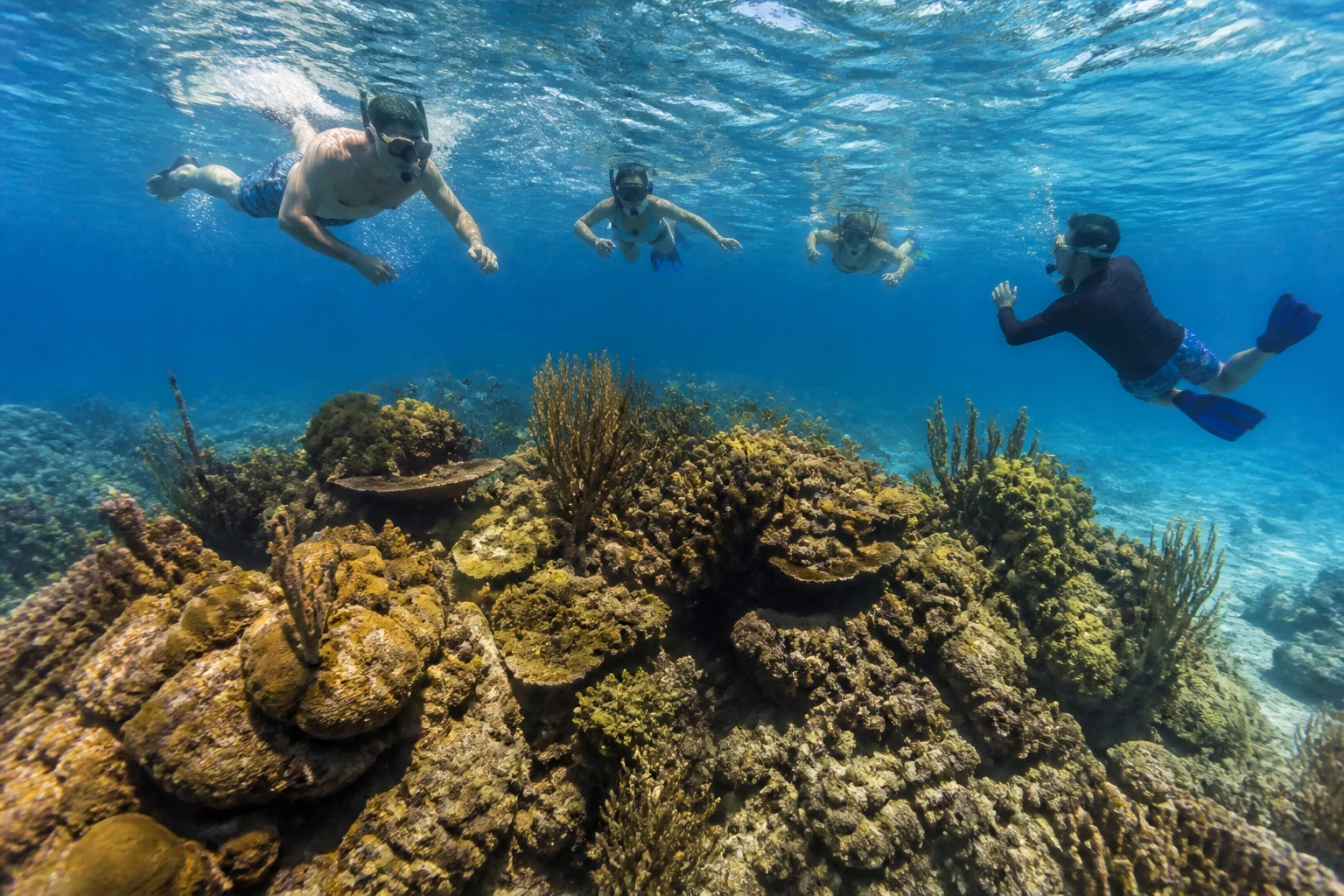
The reef is living habitat, not a handrail. CONANP’s visitor rules require snorkelers to remain at least 1.5 meters from reefs and prohibit touching coral or wildlife, feeding fauna, anchoring, and fishing. Gloves, knives, and rods are also prohibited. Follow the guide’s route, control your fins, and avoid standing on reef structures even when you need to adjust a mask or catch your breath.
Cozumel ClearBoat Adventure with Snorkeling
Perfect For Families and Couples! Hope on aboard a unique experience in the only 100% transparent boat in the World. This is definitely a one of a ki...
Cozumel Snorkeling Tour: Palancar, Columbia and El Cielo Reefs
Award Winning Snorkeling Trip! Set off for a great Adventure to the Caribbean and admire the Spectacular marine lif...
El Cielo Cozumel Snorkeling trip by Catamaran
TRAVELER’S FAVORITE TRIP! Get in the mood for fun aboard your Catamaran in a fun sail to magnificent reefs and gr...
Exclusive Private Boat to El Cielo
Indulge in the exclusivity of a Private Boat tour to Cozumel’s most breathtaking destinations: El Cielo and the wo...
The best reef encounter leaves the coral and wildlife exactly where they were, with no touching, feeding, chasing, or collecting.
CONANP’s current visitor page also says not to use sunscreen inside the protected area. That official instruction takes precedence over commercial advice suggesting that certain sunscreen products are acceptable. Confirm the rule with your authorized operator before departure and do not assume that a product labeled “reef-safe” is automatically permitted. Plan sun protection around permitted clothing, shade, and timing as directed by the operator.
Safety, swimming ability, and accessibility questions
The available evidence does not establish standardized accessibility across Cozumel snorkeling tours. Do not assume a tour is appropriate for non-swimmers, young children, pregnancy, limited mobility, or a medical condition based only on photographs or a brief label. Suitability depends on the individual vessel, boarding method, water entry, flotation equipment, supervision, and conditions on the day.
Families can use the Cozumel With Kids Guide for broader island planning, but the operator must answer activity-specific questions. State each traveler’s age, swimming experience, mobility needs, and relevant health concerns before booking. Ask whether there are age or health restrictions, how the crew assists guests on ladders, and whether staying aboard is allowed. Obtain the answer in writing when suitability determines whether the trip can proceed.
- Is swimming experience required, and how far may guests need to swim?
- What flotation equipment is supplied and required?
- Does water entry use a ladder, stairs, a platform, or a seated method?
- How does the crew assist guests with limited mobility?
- Is there a restroom, shaded seating, and space to remain aboard?
- What happens if sea conditions are uncomfortable or the trip is canceled?

Catamaran Snorkel Adventure to El Cielo and The Money Bar Beach
Set sail on the stunning catamarans La Chula or Poseidon for an unforgettable 4-hour snorkeling adventure to El Ciel...

Cozumel: Kuzá Escape Private Beach, Buffet & Open Bar
Relax on our sargassum-free beaches and make the most of your Caribbean experience! Enjoy the ultimate beach escape...

Cozumel: Water Park & Kuza Beach, Buffet & Drinks Included
Relax on our sargassum-free beaches and make the most of your Caribbean experience! Enjoy an unforgettable day at K...
Timing, sea conditions, and cancellation planning
Reef access and comfort depend on sea conditions, so fixed itineraries can change. No official current closure, storm notice, water-quality alert, or wildlife advisory was confirmed in the research available for this article. That absence is not proof that conditions will be normal on your date. Recheck with the operator shortly before departure and follow official instructions issued locally.
Ask what triggers a cancellation, who makes the decision, and whether the remedy is a refund, credit, alternate route, or new date. Cruise passengers need an additional answer: what happens when a ship changes its arrival time or misses the port? Read the policy before booking. A cheap excursion becomes expensive in a hurry if its terms do not fit a rigid travel schedule.
What to bring on a Cozumel snorkeling tour
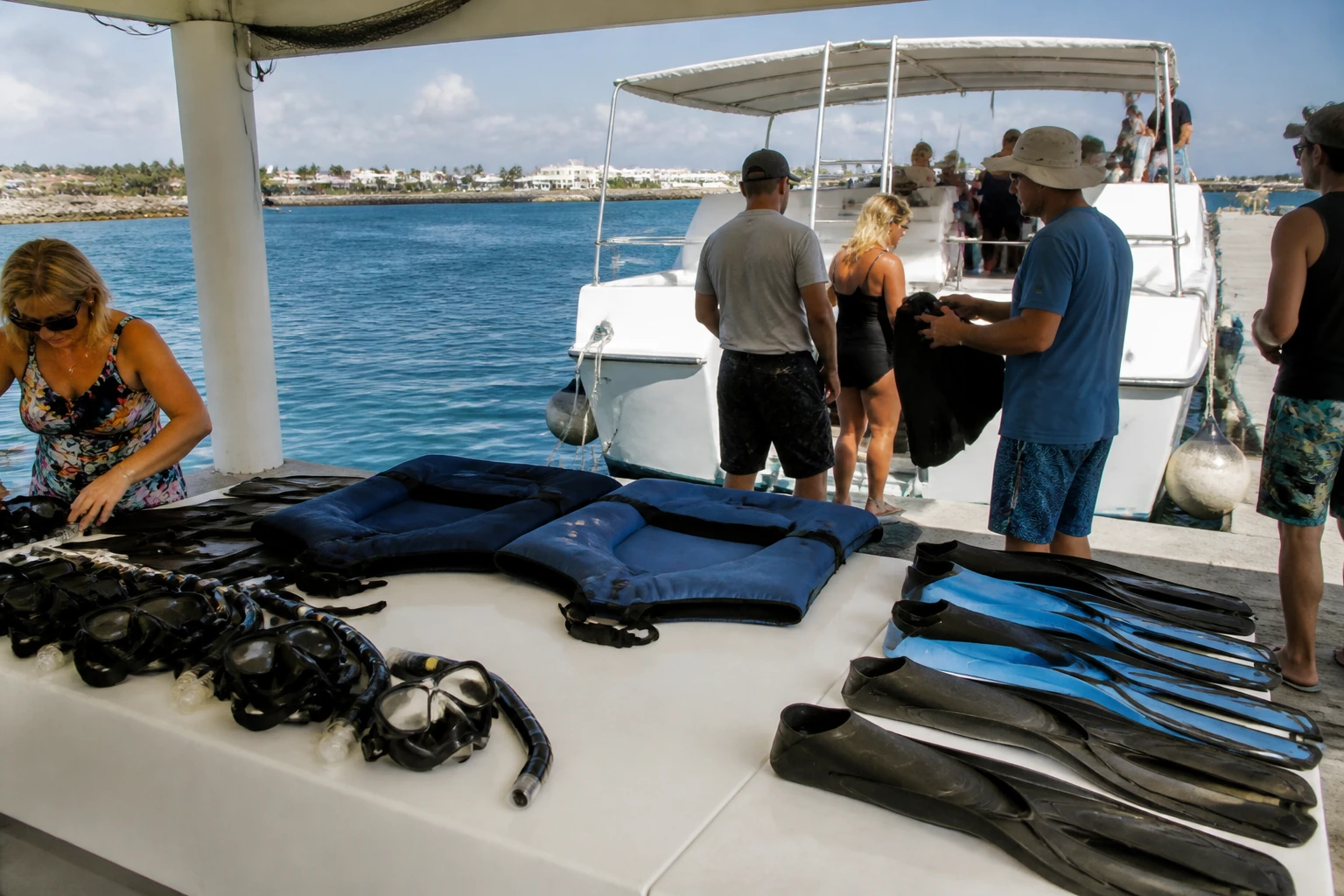
Pack lightly because small boats may have limited dry storage. Bring swimwear, a towel, drinking water if it is not supplied, and any medication you normally need. A well-fitted sun shirt can provide coverage without relying on sunscreen where park rules prohibit it. Ask whether you may bring your own mask and whether storage is available for a phone, wallet, dry clothing, and shoes.
- Swimsuit and towel
- Permitted sun-protective clothing
- Secure dry pouch if allowed by the operator
- Water and refreshments if not included
- Personal mask if the operator permits it
- Necessary medication and motion-sickness supplies approved for your needs
Leave gloves, knives, fishing equipment, rods, and anything intended for touching or collecting marine life behind. Avoid loose objects that could fall overboard. If you use prescription lenses or specialized equipment, discuss compatibility with the operator in advance. Rental gear should be included in the written list of inclusions rather than assumed from a generic snorkeling photograph.
A simple booking checklist
- Decide between a longer reef boat, short outing, private charter, glass-bottom combination, or shore session.
- Confirm the named operator, vessel, guide, and national park authorization.
- Request the planned sites, alternate sites, total duration, and expected water time.
- Verify group size, guide-to-guest ratio, swim requirements, and boarding method.
- Get the complete price and every possible additional charge in writing.
- Read the cancellation and weather policy, then create a conservative return plan.
- Reconfirm the meeting point, check-in time, itinerary, and current conditions shortly before departure.
For most travelers, the strongest choice will be an authorized, reef-focused boat tour with named southern sites, transparent logistics, and enough schedule flexibility for conditions. A shorter outing may be smarter for a cruise day, while shore snorkeling can preserve flexibility. Match the tour to the weakest swimmer and the tightest schedule in your group. The water will still be there after you take five minutes to read the fine print.
Frequently asked questions
What is the best type of Cozumel snorkeling tour?
A longer, authorized boat trip to named sites in the protected southern reef system is the best fit when reef snorkeling is your main priority. A shorter reef or glass-bottom outing may be more practical for a cruise visit. The right choice depends on your schedule, swimming comfort, group needs, and departure location.
How long do Cozumel snorkeling tours take?
Duration is product-specific. Current commercial examples include a roughly four-hour, three-stop outing and a 1.5-hour glass-bottom and reef option. Confirm whether the advertised duration includes check-in, transportation, and boarding, and ask how much time is expected in the water.
Do Cozumel snorkeling tours visit Palancar and El Cielo?
Some commercial itineraries name Palancar, Columbia, and El Cielo, but these stops are not universal or guaranteed across all tours. Choose a listing that explicitly identifies your preferred sites and ask how the route may change with sea conditions or access requirements.
Is there a national park fee for snorkeling in Cozumel?
Federal protected-area charges apply in the Cozumel reefs framework, but the available evidence did not establish a reliable current fee for every standard snorkeling visit. Ask your operator whether a fee applies to your itinerary and whether it is included in the advertised total.
Can I wear reef-safe sunscreen while snorkeling in the marine park?
Do not assume so. CONANP’s current visitor instructions say not to use sunscreen in the protected area. Confirm the rule with your authorized operator and plan around permitted sun-protective clothing and shade. A “reef-safe” label does not automatically make a product acceptable under park rules.
Are Cozumel snorkeling tours suitable for non-swimmers or travelers with limited mobility?
Suitability is not standardized. Ask the individual operator about swim requirements, flotation support, guide-to-guest ratio, boarding gaps, steps, ladders, restroom access, seating, and the option to remain aboard. A glass-bottom boat does not automatically provide accessible boarding or make snorkeling appropriate for a non-swimmer.
How much time should cruise passengers allow after a snorkeling tour?
Build a generous buffer beyond the advertised finish time. Account for unloading, collecting belongings, ground transportation, and possible delays. Confirm the meeting location, return plan, cancellation terms, and ship time before booking because tour schedules and departure harbors vary.
What reef rules should I follow in Cozumel?
Remain at least 1.5 meters from reefs, do not touch coral or wildlife, do not feed fauna, and do not fish or anchor. Gloves, knives, and rods are prohibited. Use authorized boats and guides, follow crew instructions, and confirm the current sunscreen rule before departure.

ATV 4×4+Cenote+Snorkeling+Beach Club+ Lunch+Sabores de Cozumel
Your Cozumel adventure begins with a hassle-free pickup followed by a comfortable A/C transfer to our exhilarating ATV ride through the lush jungle. N...

Cozumel Starfish and Tropical Reef Snorkeling by Powerboat with Lunch
The island of Cozumel with its turquoise waters, relaxed atmosphere and idyllic white sandy beaches is a paradise fu...

ATV Mud Kicking and Snorkeling by Boat in Cozumel
Your tour starts on board a comfortable transport and drives you to El Cedral, located right in the hearth of the Co...

Cozumel ATV Jungle Adventure and Snorkeling with Lunch
Embark on the ultimate adventure in Cozumel, Mexico, with ATV Jungle Adventure, Snorkeling and Unlimited Beach Break...
Experiences to explore
 Explore experience ↗
Cozumel Island hotels to Cozumel Cruise Port - Departure Private Transfer
◷ 30 min
Your driver will be waiting for you at a scheduled time and you will travel comfortably to your destination. • Meeting with a Nameplate
See dates for Current pricing
View dates Explore experience ↗
Cozumel Cruise Port to Mexico Cozumel Airport (CZM) - Departure Private Transfer
◷ 20 min
Book your Private Departure Transfer from Cozumel Cruise Port to Mexico Cozumel Airport (CZM). Don't go through all the hassle of waiti
See dates for Current pricing
View dates Explore experience ↗
Chankanaab Cozumel Open Bar with Beach Access, Lunch & Snorkel
◷ 3 hr
This Cozumel All-inclusive Day pass 4 hours program features Beach access, Snorkel gear, Park Admission ticket, A la Carte Lunch, Open
See dates for Current pricing
View dates