Cozumel Travel Tips for First Timers
Cozumel rewards a little advance planning. The island can be reached by direct flight or passenger ferry, while its headline outings often require boats, road transport, or most of a day. First-time visitors will have an easier trip if they settle the arrival route, choose a practical base, and resist packing every beach and reef into one schedule.
- Confirm flights, ferry operations, and marine tours close to your travel date.
- Leave a generous connection window if traveling through Cancún and Playa del Carmen.
- Choose one main outing for a short visit instead of trying to circle the island and take a boat tour in the same day.
- Stay near central San Miguel if walkability, restaurants, and easy ferry access matter most.
- Check beach and water conditions shortly before departure because sargassum and marine operations can change.
The best first trip is usually built around one priority. That might be snorkeling, diving, a nature reserve, a beach afternoon, or time in San Miguel. Once that choice is fixed, transport and lodging decisions become much clearer. A broader look at the best things to do in Cozumel for first-time visitors can help narrow the field before reservations are made.

Private CozuShuttle from Cozumel Airport to hotel in Cozumel
Our private service is special, first of all because its private, its convenient and you asure that you and your crew will enjoy and relax during tran...

Cozumel: Private Excursion - MiniVan or Jeep (Your Day, Your Way)
We offer a unique and customizable experience tailored to your individual needs and preferences. With the help of our knowledgeable guides, travelers...
Treat schedules and operating conditions as moving parts rather than permanent facts. Flight routes may be seasonal, ferries can change operations, and boat activities depend on current conditions. Verify each important segment with the airline, ferry company, hotel, or tour operator before committing to a tight sequence.
Choose the simplest route to Cozumel
Official municipal tourism guidance identifies two main arrival patterns: fly directly to Cozumel or reach Playa del Carmen on the mainland and take a passenger ferry. Direct air service removes the mainland transfer, but routes can be seasonal. Check the operating airline rather than relying on an old route list or a flight shown in an outdated travel article.
Flying directly to Cozumel
A direct flight is generally the less complicated choice because it avoids a ground transfer and ferry crossing. The tradeoff may involve schedule availability or the overall trip cost. Compare the complete journey, including onward transportation to your lodging, instead of comparing only the first ticket shown in a search result.
Confirm the flight again before departure, particularly when traveling on a route that may operate only during part of the year. If the trip depends on a separate connecting ticket, build enough time for baggage collection, check-in requirements, and ordinary delays. No single connection margin works for every airline or itinerary.
Arriving through Cancún and Playa del Carmen
The mainland route has several stages. Municipal guidance describes ground transportation from Cancún to Playa del Carmen, a short walk from the ADO terminal to the pier, and then the passenger ferry to Cozumel. The ferry crossing itself is described as about 40 minutes, but that figure does not include the airport transfer, waiting, walking, ticketing, or boarding.
Avoid treating a same-day flight, ground transfer, and ferry as one guaranteed connection. Allow a generous buffer, and consider the consequences of a delayed inbound flight before booking a late arrival. A Playa del Carmen to Cozumel ferry guide is useful when planning the pier portion, but the current schedule should still be confirmed with the operator.
Municipal information names Winjet, Xcaret Xailing, and Ultramar as passenger ferry operators. Operator availability and sailing times remain subject to change, so verify the intended departure on the day of travel. If you are making a return day trip, confirm the return sailing before designing the rest of the schedule.
Pick a base that matches your daily plans
Central San Miguel is the most convenient first-timer base when you value walkability. It places visitors near the passenger ferry, restaurants, shops, and the waterfront. Staying nearby can also reduce the number of routine taxi trips required for meals and evening walks. The Downtown Cozumel Travel Guide can help you judge whether this central setting fits your plans.
Costa Sur may suit a trip centered on diving or boat pickups, but it usually creates greater dependence on taxis or a rented vehicle. Before booking, ask the lodging or dive operator where departures take place. A hotel that looks close to the sea on a map may still be inconvenient for the specific pier, restaurant, or activity you plan to use.
Do not assume that an advertised sea view includes a sandy swimming beach. Cozumel accommodations can face the water while offering a different shoreline experience than the broad beach a first-time visitor imagined. Read the property description carefully and ask direct questions about water entry, beach access, and the features that matter to your group.
| Base | Best fit | Main tradeoff |
|---|---|---|
| Central San Miguel | Walkability, ferry access, restaurants, shops, and waterfront time | Trips beyond town may still require a taxi or rental vehicle |
| Costa Sur | Dive-focused stays and some boat-pickup plans | Greater reliance on taxis, scooters, or another vehicle |
| Sea-view property | Travelers prioritizing an ocean outlook | A sea view does not guarantee a sandy swimming beach |
The detailed Where to Stay in Cozumel for First Timers guide can help compare these areas. Before paying, confirm what is included, how you will reach your main activity, and whether the room and common areas meet your mobility needs. Those questions are more useful than choosing solely by a scenic photograph.

Mr. Sanchos Beach Club All-Inclusive Day Pass
Spend a relaxing day under the Cozumel sun at Mr. Sancho's Beach Club, where this day pass provides an all-you-can-e...

Cozumel: Kuza Escape– Buffet & Open Bar Included
KUZÁ Deluxe Pass – Beach Experience Enjoy an unforgettable beach day with the KUZÁ Deluxe Pass, giving you acces...

Cozumel: Paradise Beach Club All-Inclusive Day Pass
Paradise Beach is now offering an all-inclusive option. You can choose from our excellent menu (No Buffet) served at...
Decide how you will get around the island
Municipal tourism information identifies bicycles, rental cars, and taxis as transportation options. The right choice depends on where you stay and how much of the island you intend to cover. Visitors based in central San Miguel may combine walking with short taxi rides, while broader exploration can make a rental vehicle more practical.

Walking and taxis for a town-focused trip
If your plans revolve around central San Miguel, staying near the center can simplify daily movement. Walkable meals and waterfront time reduce the need to arrange transportation for every small errand. Taxis can then cover selected trips outside the central area. A guide to getting around Cozumel without a car offers a useful planning framework for this style of visit.
Current taxi fares were not established in the available evidence, so ask about the fare before beginning a ride and confirm the payment method directly. Do not build a budget around an undated fare chart. If you need a return pickup from a less central destination, arrange the details in advance rather than assuming a vehicle will be waiting.
Rental vehicles and bicycles for wider exploration
A rental vehicle can make sense when several planned stops lie beyond town. Compare the full rental terms and the practical responsibilities that come with driving. Ask the provider about required documents, insurance terms, fuel rules, deposits, parking expectations, roadside procedures, and the condition of the vehicle before departure.
Bicycles are also recognized as an island transport option, but suitability depends on the route, distance, weather, traffic, and rider confidence. Ask a local provider about current route conditions and equipment. Carry water, use sun protection, and avoid turning an ambitious island circuit into your first experiment with long-distance tropical cycling.
Make one major activity the center of the day
Trying to fit a boat excursion, a reserve, a town walk, and a distant beach into one short day creates fragile logistics. A recent local tourism guide recommends selecting one main activity, especially for visitors with limited time. Build meals and smaller stops around that anchor instead of making each hour dependent on perfect transportation.
El Cielo is a boat-based outing
Municipal tourism information states that El Cielo is reached by boat. That makes the departure point, check-in time, return estimate, and marine conditions central to the plan. The El Cielo Cozumel Snorkeling Guide can help visitors understand the outing, but exact inclusions and operating details must be checked with the chosen provider.
Ask where the boat leaves, when passengers must arrive, how long the full experience is expected to take, and what happens if conditions interrupt the trip. Also request operator-specific information about swimming ability, flotation equipment, shade, restroom access, and accessibility. These details were not established across all boats in the available evidence.
Punta Sur works best as a destination, not a quick stop
Punta Sur is described by municipal tourism information as a large nature reserve with beaches, the Celarain lighthouse, wildlife, and a lagoon boat ride. Its range of features makes it better suited to a substantial outing than a rushed addition after another major activity. Review the Punta Sur Eco Beach Park Guide when deciding how it fits your day.
Confirm current admission details, operating conditions, transport requirements, and the availability of individual experiences before leaving. No verified current admission price or accessibility profile was established in the research. Travelers with mobility needs should ask specifically about surfaces, distances, steps, restrooms, vehicle access, and lagoon boat boarding.
Still comparing Cozumel Airport Transfer And First Time Trip Planning?
Ask for tour ideas, hotel suggestions, or a simple trip plan that combines both.
Trip Helper
Leave room for San Miguel
A town-centered day is a sensible choice when arrival and departure times leave only a partial window. Restaurants, shops, the waterfront, and the ferry area are concentrated in and around central San Miguel. A walking afternoon in San Miguel can be paired with a meal without requiring a full island transportation plan.
Plan costs by category, not by outdated price lists
Reliable current figures for ferry tickets, taxis, rentals, and admissions were not established in the research. Prices should therefore be checked on official booking pages or directly with providers immediately before publication or travel. Old screenshots and undated social posts can create a budget that fails before the first ferry boarding.
Start by comparing the total cost of the two arrival patterns. A mainland route may involve airport ground transportation, the ferry, and island transportation after arrival. A direct flight may remove several steps but differ in fare or availability. Compare complete door-to-door journeys rather than airfare alone.
For daily movement, compare expected taxi use with the complete cost and responsibility of a rental vehicle. For activities, compare an organized shore excursion or boat tour with independent transportation, admission, equipment, and timing. The least expensive headline option may not remain cheapest after every required segment is included.
- Arrival transportation to the island
- Transportation between the terminal, hotel, and activities
- Accommodation and any required deposits
- Tour, equipment, or attraction charges
- Meals, drinks, and personal purchases
- A contingency allowance for schedule changes
Check marine and beach conditions close to departure
Do not assume that Cozumel is always free of sargassum or that conditions will be identical around the island. A municipal report documents beach-cleaning work and sargassum removal, showing that active management can be necessary. Check recent conditions for the specific beach or activity area shortly before your visit.

Marine outings also depend on current operating conditions. Reconfirm the tour, meeting point, check-in time, and return estimate with the operator. If an excursion is the main reason for the trip, ask about cancellation or rescheduling procedures before booking rather than after the weather or water changes.
A flexible backup can preserve the day. Consider a central San Miguel plan or another activity that does not depend on the same boat departure. Keep the backup geographically simple, particularly when a ferry or cruise departure sets a firm limit on the afternoon.
Ask specific accessibility questions before booking
The municipal listing for the local taxi union says its fleet includes regular taxis, taxi vans, and ramp-equipped vans for disabled passengers. Adapted transportation therefore exists, but availability should not be assumed at every taxi stand. Contact the operator in advance and confirm the vehicle type, passenger capacity, mobility-device dimensions, pickup point, and return arrangements.
The available evidence did not establish the accessibility of ferry terminals, individual beaches, dive boats, attractions, or every hotel. Ask each provider precise questions. Useful topics include step-free routes, curb heights, transfer assistance, seating, restroom access, dock surfaces, sand crossings, boat boarding methods, and secure storage for mobility equipment.
Request confirmation in a form you can retain, and share arrival details when reserving adapted transportation. A general statement that a venue is accessible may not answer the question that matters most. Describe the equipment and assistance required so the operator can respond to the actual situation.

Cozumel Scuba Diving at Chankanaab
Get instructions from a certified instructor on how to use the scuba equipment. Dive through ancient caves and learn...
Mr. Sanchos Beach Club All-Inclusive Day Pass
Spend a relaxing day under the Cozumel sun at Mr. Sancho's Beach Club, where this day pass provides an all-you-can-e...
Cozumel: Kuza Escape– Buffet & Open Bar Included
KUZÁ Deluxe Pass – Beach Experience Enjoy an unforgettable beach day with the KUZÁ Deluxe Pass, giving you acces...
Pack for sun, water, and schedule changes
A small day bag should support both the planned activity and an unexpected delay. Bring sun protection, drinking water, suitable footwear, any essential medication, and a dry layer for air-conditioned interiors or a breezy boat ride. Use a protective pouch for travel documents and electronics when the day includes a ferry, beach, or boat.
Carry reservation details and the name of the actual operating company, not only the booking platform. Save meeting instructions where they remain available without a data connection. If traveling through Playa del Carmen, keep documents and essentials easy to reach during the walk and ferry transfer instead of burying them in checked luggage.
Ask marine operators what equipment they supply and what passengers must bring. Requirements vary, so avoid assuming that towels, flotation gear, food, shade, lockers, or dry storage are included. Travelers who use prescription masks, specialized mobility equipment, or essential medical supplies should discuss those needs before the activity date.
Build a realistic first-time Cozumel plan
- Choose a direct flight or the mainland transfer and passenger ferry route.
- Select lodging based on the ferry, town, dive operation, or main outing you expect to use most.
- Choose one major activity for each short day.
- Decide whether walking and taxis are enough or a rental vehicle is justified.
- Confirm transportation, marine conditions, and return schedules close to the travel date.
- Keep one geographically simple backup plan.
Visitors staying longer can distribute the major outings across separate days. A 3 Days in Cozumel Itinerary is a useful model for giving a boat excursion, a nature-focused outing, and central San Miguel their own space. Even then, avoid scheduling the most time-sensitive activity immediately after a complicated arrival.
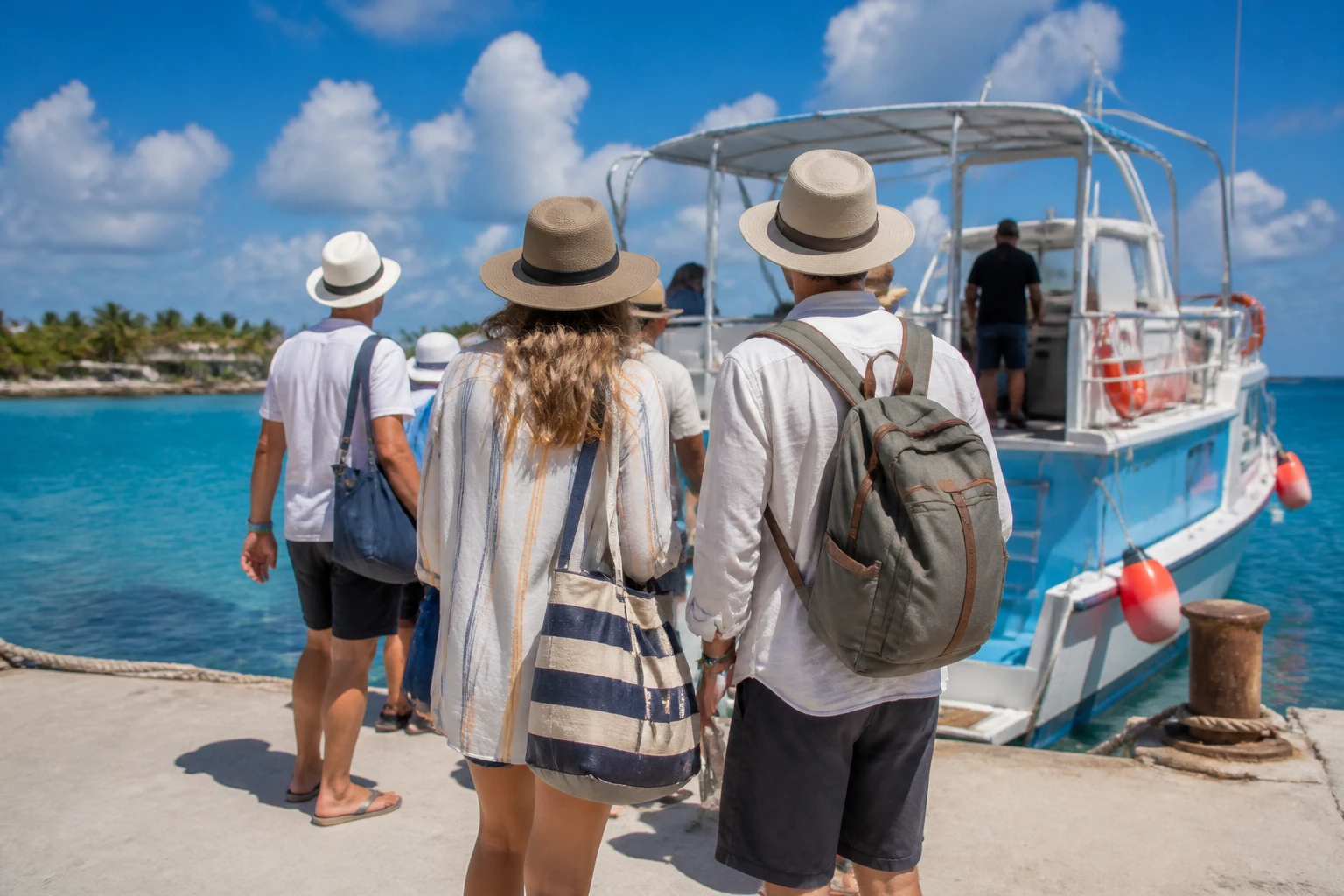
Day visitors should work backward from the required return time. Confirm the ferry or ship schedule, allow time to reach the departure point, and avoid placing a distant outing at the end of the day. Cruise arrival and departure windows mentioned in travel guides are only rough context, never a substitute for the instructions issued for your sailing.
Cozumel becomes easier to enjoy when the plan has breathing room. Settle the difficult connections first, reserve the day’s main experience, and leave space for a meal or waterfront walk. The island’s boats, beaches, wildlife areas, and town deserve attention rather than a race against the clock.
Frequently asked questions
What is the easiest way to reach Cozumel for a first trip?
Flying directly to Cozumel is generally the simpler route because it avoids the mainland ground transfer and passenger ferry. Direct routes may be seasonal, so confirm service with the airline. The alternative is ground transportation to Playa del Carmen followed by the passenger ferry.
How long is the ferry from Playa del Carmen to Cozumel?
Municipal tourism guidance describes the passenger crossing as about 40 minutes. That is time on the water, not the complete journey. Add time for the mainland transfer, the walk to the pier, ticketing, waiting, boarding, and transportation after reaching Cozumel.
Where should a first-time visitor stay in Cozumel?
Central San Miguel is a practical choice for ferry access, restaurants, shops, waterfront time, and walkability. Costa Sur may better suit some dive-focused stays and boat pickups, but it generally creates more dependence on taxis or another vehicle.
Do first-time visitors need to rent a car in Cozumel?
Not necessarily. Visitors staying near central San Miguel can often combine walking with taxis. A rental vehicle becomes more useful when the itinerary includes several places beyond town. Municipal tourism information identifies bicycles, rental cars, and taxis as island transportation options.
Can El Cielo and Punta Sur be visited quickly on the same day?
They are better treated as destination-style outings. El Cielo is reached by boat, while Punta Sur is a large nature reserve with beaches, a lighthouse, wildlife, and a lagoon boat ride. Trying to combine both in a short visit can create difficult transportation and timing.
Is Cozumel always free of sargassum?
No such guarantee is supported by the evidence. Municipal reporting documents beach cleaning and sargassum removal, which shows that active management can be required. Check conditions for the intended beach close to your travel date.
Are wheelchair-accessible taxis available in Cozumel?
The municipal listing for the taxi union states that its fleet includes ramp-equipped vans for disabled passengers. Travelers should reserve in advance and confirm the vehicle, pickup point, passenger capacity, mobility-device fit, and return arrangements rather than assuming immediate availability.
How much should I budget for a first trip to Cozumel?
No reliable current fares or admission prices were established in the research. Build a category-based budget covering arrival transportation, island transport, lodging, activities, food, and contingency funds. Verify current figures directly with airlines, ferry companies, hotels, rental providers, attractions, and tour operators.
Private CozuShuttle from Cozumel Airport to hotel in Cozumel
Our private service is special, first of all because its private, its convenient and you asure that you and your crew will enjoy and relax during tran...
Cozumel: Private Excursion - MiniVan or Jeep (Your Day, Your Way)
We offer a unique and customizable experience tailored to your individual needs and preferences. With the help of ou...
Experiences to explore
 Explore experience ↗
Cozumel El Cielo Snorkeling Reef and Marine Experience
◷ 4 hr 40 min
Experience the very best of Cozumel in one unforgettable adventure. Explore the world-famous El Cielo sandbar, snorkel vibrant coral re
See dates for Current pricing
View dates Explore experience ↗
Bavarian Fiesta Snorkel Activity in Glass Bottom Boat at San Miguel de Cozumel
◷ 4 hr
Our activity brings you really to the most beautiful snorkel places on Cozumel. We created for you a mix of things that you don’t see o
See dates for Current pricing
View dates Explore experience ↗
Cozumel's First Distillery: Exclusive Craft Rum & Gin Tasting
◷ 2 hr 30 min
The tour will take place in the first and only distillery in Cozumel! Our distillates are crafted entirely in-house with the utmost car
See dates for Current pricing
View dates