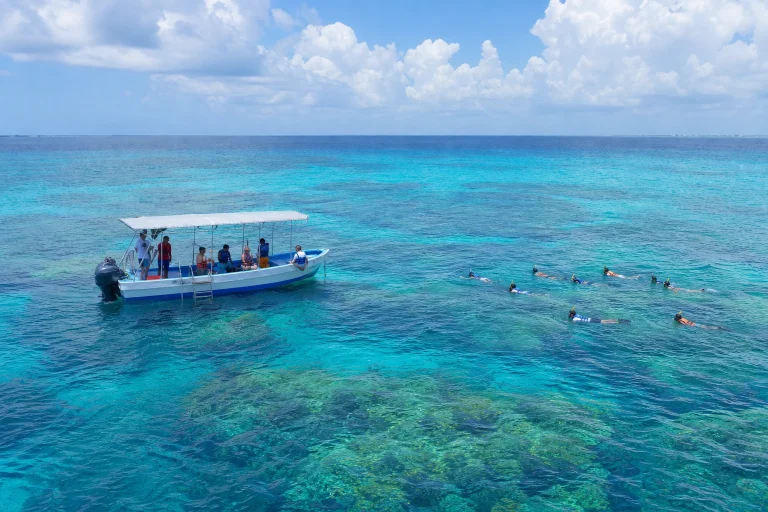
Paradise Reef Cozumel Guide
Paradise Reef is one of Cozumel’s more approachable names for travelers researching a reef outing near the island’s developed west-coast zone. Commercial operators feature Paradise or Paraiso sites on both scuba and snorkeling itineraries, but those experiences are not identical. The safest plan is to choose the activity first, then ask exactly which reef section the boat intends to visit.
- Treat Paradise Reef as a boat-accessed activity unless your operator confirms another arrangement.
- Ask whether the itinerary visits Paradise, Paraiso Bajo, Paraiso Profundo, or another named section.
- Choose a snorkeling excursion or a certified-diver itinerary based on your skills. They are not interchangeable.
- Confirm equipment, environmental charges, departure details, return time, and cancellation terms before paying.
- Recheck wind, sea conditions, visibility expectations, and the planned reef shortly before departure.
The appeal is easy to understand. A relatively shallow-to-moderate reef can offer an inviting window into Cozumel’s underwater landscape without committing an entire day. Yet the name “Paradise Reef” covers enough variation that broad promises about depth, visibility, wildlife, or conditions can mislead. A good operator should explain what its specific trip includes and how the plan may change if the sea does not cooperate.

Cozumel Scuba Diving at Chankanaab
Top Rated Activity by Cruise Travelers! Get instructions from a certified instructor on how to use the scuba equipment. Dive through ancient caves a...

Exclusive Private Boat to El Cielo
Indulge in the exclusivity of a Private Boat tour to Cozumel’s most breathtaking destinations: El Cielo and the wo...

Jeep or Buggy Private VIP All inclusive
There are several Jeep Tours in Cozumel, but ours is simply one of a kind. Private and Exclusive Hop on our AC autom...
What and where is Paradise Reef?
Paradise Reef is presented by commercial excursion sources as a shallow-to-moderate-depth reef used for snorkeling and scuba diving. One dive operator lists Paradise Reef at 45 feet on a boat-dive itinerary. A separate three-reef snorkeling excursion names Paraiso Bajo and Paraiso Profundo among its possible stops. These listings support boat-based planning, but they do not establish that every operator uses the same entry point or visits precisely the same reef formation.
That naming issue matters when comparing tours. “Paradise,” “Paraiso,” “shallow,” and “deep” may appear in descriptions, while the planned route can depend on activity type and operating conditions. Ask the company to write down the intended site name and approximate depth. Certified divers should also confirm whether Paradise is the main dive, one stop in a multi-site outing, or a substitute site used when plans change.
The reef appears best suited to visitors who value a relatively shallow experience and a boat outing near Cozumel’s main developed west-coast area. Its central tradeoff is dependence on an operator. Independent travelers cannot assume there will be a public shoreline entrance, changing facilities, equipment rental, or a safe route to the reef without a boat.
Snorkeling and scuba diving are different trips
A snorkeling excursion keeps participants at the surface with a mask, snorkel, fins, and usually some form of flotation. The exact equipment package must be confirmed with the operator. A scuba itinerary uses dive equipment and should be selected according to certification, recent experience, depth, and the company’s participation rules. A listing for one activity should never be treated as evidence that the other is offered on the same schedule.
| Planning point | Snorkeling trip | Scuba trip |
|---|---|---|
| Primary position | At the surface | Below the surface using scuba equipment |
| What to verify | Swimming rules, flotation, entry method, guide supervision | Certification rules, planned depth, equipment, guide arrangement |
| Reef name | Confirm the exact Paraiso or Paradise section | Confirm the exact Paradise section and its role in the itinerary |
| Best booking question | How much open-water swimming is expected? | What certification and recent experience are required? |
| Do not assume | Guaranteed calm water or sightings | A snorkeling itinerary follows the same route |
Travelers comparing certified diving options can also consult the site’s guide to the best Cozumel scuba diving tours. Use that broader comparison to evaluate group structure, equipment, and departure arrangements, then return to the operator with Paradise-specific questions. The reef name alone does not reveal how crowded a boat will be or how much individual support a guest will receive.
How to arrange a Paradise Reef boat trip
Booking a licensed boat-based snorkeling or dive trip is the most defensible way to plan access. Departure arrangements vary. One dive company advertises boat pickups from Hotel Cozumel & Resort and Villablanca Beach, while cruise excursions may set their own meeting locations. Do not head toward a resort dock or marina based only on the words “Paradise Reef.” Use the meeting instructions issued for your reservation.

- Choose snorkeling or scuba diving before comparing itineraries.
- Ask for the complete name of the intended Paradise or Paraiso reef section.
- Confirm the meeting point and whether transportation or a boat pickup is included.
- Request a list of included equipment and any items that cost extra.
- Ask about environmental charges, taxes, deposits, and cancellation rules.
- Confirm the expected return time and the operator’s procedure when weather changes.
If the departure point is away from your hotel or cruise terminal, plan the land transfer separately. The guide to getting around Cozumel without a car can help visitors think through local transportation between their lodging, town, and an operator’s meeting point. Leave extra time for finding the correct dock, checking in, fitting equipment, and clarifying where the boat returns.
Save the operator’s current contact information and carry the reservation name in a form that works without mobile data. Confirm the meeting point again the day before. Resort names, beach locations, downtown offices, cruise terminals, and marinas are not interchangeable, even when they sit along the same side of the island.

ATV 4×4+Snorkeling+Beach Club+ Lunch+Sabores de Cozumel
Take part on a thrilling ATV Adventure with a family owned Tour Operator that has been in business for over 25 years...

Cozumel Snorkeling Tour: Palancar, Columbia and El Cielo Reefs
Award Winning Snorkeling Trip! Set off for a great Adventure to the Caribbean and admire the Spectacular marine lif...

El Cielo Cozumel Snorkeling trip by Catamaran
TRAVELER’S FAVORITE TRIP! Get in the mood for fun aboard your Catamaran in a fun sail to magnificent reefs and gr...
How much time to allow
No universal Paradise Reef duration was established in the available evidence. As one useful example, a commercial three-reef snorkeling excursion that includes named Paraiso sites describes a total duration of about 3.5 to 4 hours. That figure applies to that excursion, not every Paradise Reef boat. Check whether a quoted duration begins at check-in, boat departure, or arrival at the first reef.
A morning departure is a practical choice when available. It creates more schedule buffer if weather, check-in, or boat operations cause a change. Morning is not a verified Paradise Reef rule, and conditions are never guaranteed by the clock. Travelers should choose a time that also leaves a comfortable margin before a ferry, flight, cruise departure, or fixed dinner reservation.
Cruise passengers need an especially firm return plan. Compare the operator’s local time with the ship’s required all-aboard time, identify the terminal, and ask where the boat trip ends. The Cozumel cruise port guide provides useful context for planning a port day, but the excursion operator and cruise line remain the right sources for current meeting and return instructions.
Costs, fees, and what the price may include
There is no verified current price that can be presented as the standard cost of visiting Paradise Reef. Public rates may represent multi-reef packages rather than a single-site outing, and prices can change. Compare the complete trip rather than choosing from the headline amount alone. Equipment, transportation, refreshments, taxes, environmental charges, photographs, and gratuities may be handled differently by each company.
Mexico’s protected-areas authority publishes fee information for recreational and tourism use of specified reefs in Cozumel’s national reef park. However, the available material does not establish a current Paradise Reef visitor amount or confirm how a particular fee category applies to this outing. Ask the operator whether a park fee, marine charge, wristband, or similar payment is included, and verify the amount on the booking date.
- Total price after taxes and mandatory charges
- Mask, snorkel, fins, flotation, or scuba equipment
- Hotel transfer, cruise-area transfer, or boat pickup
- Water, snacks, towels, lockers, or dry storage
- Deposit, refund, no-show, and weather policies
- Optional photographs or other add-ons
Get the final inclusions in writing before paying. If two excursions have different prices, check their total duration, number of reef stops, equipment package, group arrangement, and transportation details. A cheaper listing can become less convenient if it requires a separate taxi, additional gear rental, or a long wait after the activity.
Weather, water conditions, and seasonal uncertainty
No operator can responsibly guarantee calm water, clear visibility, a particular coral scene, or specific wildlife. Excursions may be adjusted or cancelled because of weather or itinerary changes. Ask when the company makes its go-or-no-go decision, how it contacts guests, and whether a changed reef counts as fulfillment of the booking. Those details can matter as much as the forecast.

Sargassum also varies by coast and day. In July 2025, Cozumel’s municipal government reported the west side free of sargassum while arrivals persisted on the east coast. That older update offers geographic context, not a report for current conditions or a promise about Paradise Reef. Check recent local information and ask the operator what it is observing shortly before departure.
Build flexibility into the day. A substitute reef may still provide an enjoyable outing, but guests who care strongly about visiting Paradise should ask whether they can reschedule or cancel if the site changes. Listen carefully during the boat briefing. Current, entry procedures, exit procedures, and group signals may differ from assumptions formed on shore.
Still comparing Paradise Reef Cozumel Snorkeling Scuba?
Ask for tour ideas, hotel suggestions, or a simple trip plan that combines both.
Trip Helper
What to bring on the boat
Pack lightly because open boats can have limited dry space. Wear a swimsuit under quick-drying clothing and bring sun protection appropriate for the operator’s rules. A brimmed hat, sunglasses with a secure strap, drinking water, and a dry layer for the ride back can improve comfort. Secure every loose item before the boat accelerates.
- Reservation details and required identification
- Swimsuit and quick-drying cover-up
- Secure hat and sunglasses
- Towel if the operator does not provide one
- Reusable water bottle if permitted
- Small dry pouch for essentials
- Personal seasickness supplies chosen with appropriate medical advice
- Any prescription medication you may need during the outing
Avoid bringing valuables that you cannot keep secure and dry. Ask whether the boat has shaded seating, a marine toilet, drinking water, storage, and room for a personal bag. Guests using prescription masks or their own fins should confirm compatibility and storage before arrival. Scuba divers should request a precise equipment list rather than assuming every item is included.
Accessibility and comfort questions to ask
Reliable accessibility specifications were not available for Paradise Reef boats, docks, transfers, or in-water assistance. One commercial snorkeling excursion is categorized as active and sets a minimum age of eight, but its rules should not be applied to every operator. Families can use the Cozumel with kids guide for broader planning, then request the current age, swimming, supervision, and equipment requirements for this particular activity.
Travelers with limited mobility, balance concerns, sensory needs, or transfer-assistance requirements should ask for written details. Important questions include step-free access, dock surfaces, the gap between dock and boat, boarding steps, ladder design, flotation options, seating support, shade, and in-water assistance. Also ask whether a companion can remain aboard without entering the water and what that person would pay.
A boat described as easy to board may still involve a high step, moving platform, narrow passage, or ladder exit. Share specific needs instead of asking only whether the trip is “accessible.” If possible, request recent photographs of the actual boat and boarding point. Verify whether the company can guarantee that same vessel on the scheduled date.
Reef etiquette and responsible participation
Follow the guide’s briefing and remain within the assigned group. Keep fins and equipment under control, especially during entry and while adjusting a mask. Do not stand on, touch, collect, chase, or feed marine life. If you need help, signal the guide rather than grabbing the bottom or another swimmer without warning.

Good buoyancy and calm movements protect both the reef and the participant. Snorkelers can ask for flotation before entering instead of waiting until fatigue appears. Divers should be honest about certification, recent experience, air use, and comfort. The Cozumel Reefs National Marine Park guide offers broader context for responsible reef visits and the protected marine environment.
Never feel pressured to enter if the conditions or boarding method exceed your comfort level. Ask what happens if you decide to remain on the boat. Refunds should not be assumed, but knowing the policy in advance makes the decision clearer and reduces awkward negotiations on a moving deck.

Cozumel ClearBoat Adventure with Snorkeling
Perfect For Families and Couples! Hope on aboard a unique experience in the only 100% transparent boat in the World...

Jade Caverns Private Jeep Tour with Lunch and Snorkeling
Discover Cozumel’s beauty with the Private Jeep to Jade Cavern, designed to be fully customizable to your preferen...

Starfish, Stingrays and the Cozumel Turtle Sanctuary Snorkel Tour
People’s Choice- Best snorkeling tour! immerse in a world of Adventure and admire Spectacular marine life on this...
Who should choose Paradise Reef?
Paradise Reef is a promising fit for travelers seeking a relatively shallow reef experience and a boat outing associated with Cozumel’s developed west-coast zone. It may also suit visitors who prefer an activity that can fit into part of a day, provided the chosen operator’s schedule supports that plan. The final decision should depend on the exact section, activity, group format, and return time.
It is less straightforward for travelers determined to snorkel independently, people who need verified step-free facilities, or guests who want certainty about a particular depth or reef route. Weather and sea conditions can alter the plan. Visitors with tight cruise or ferry deadlines may prefer an excursion whose pickup and return arrangements are designed around that fixed schedule.
Travel companions who do not want a boat or open-water activity might prefer to plan a separate shore day. The Cozumel beach clubs guide can help with researching land-based facilities, while active participants join the reef excursion. Confirm meeting times carefully if the group plans to reunite afterward.
A simple Paradise Reef planning checklist
- Decide between snorkeling and certified scuba diving.
- Identify the exact Paradise or Paraiso reef section in the itinerary.
- Confirm meeting point, check-in time, boat departure, and return location.
- Request current equipment, age, swimming, and certification rules.
- Verify the total price and every mandatory environmental charge.
- Ask about boarding, ladders, flotation, shade, and accessibility needs.
- Read the weather, substitution, cancellation, and refund policies.
- Reconfirm conditions and departure instructions shortly before the trip.
- Leave a generous buffer before a cruise, ferry, flight, or other fixed commitment.
Paradise Reef rewards careful planning more than guesswork. Choose the right type of outing, pin down the reef section, and understand the boat logistics before paying. With those details settled, the day becomes simpler: arrive prepared, listen to the briefing, move gently in the water, and let the operator’s current safety judgment guide the route.
Frequently asked questions
Can you snorkel at Paradise Reef in Cozumel?
Yes. Commercial excursion listings include named Paraiso sites on snorkeling itineraries. However, the evidence does not show that every operator visits the same section. Confirm the exact reef name, swimming requirements, equipment, and boat arrangements before booking.
Is Paradise Reef suitable for scuba diving?
Commercial dive itineraries include Paradise Reef, including one listing that gives a depth of 45 feet. Depth descriptions conflict across available materials, so certified divers should ask the selected operator which section and approximate depth are planned.
Can I reach Paradise Reef directly from shore?
Independent shore access should not be assumed. The available evidence supports planning Paradise Reef as an operator-accessed boat activity. Ask the chosen company for its meeting point and boarding instructions.
How long does a Paradise Reef excursion take?
There is no verified universal duration. One commercial three-reef snorkeling excursion featuring named Paraiso sites lists about 3.5 to 4 hours, but that should not be applied to every tour. Confirm whether the quoted time includes check-in and transfers.
How much does it cost to visit Paradise Reef?
No current standard Paradise Reef price was established. Rates can vary with activity type, equipment, transfers, number of stops, taxes, and environmental charges. Request a current itemized total directly from the operator.
Is Paradise Reef accessible for travelers with limited mobility?
The available sources do not provide reliable specifications for boats, docks, transfers, ladders, or in-water assistance. Ask for written details about step-free access, boarding gaps, transfer help, ladder use, flotation, seating, and companion policies.
Is Paradise Reef good for cruise passengers?
It can fit a port day if the specific excursion returns with ample time before the ship’s deadline. Confirm the terminal, meeting point, local time, return location, weather policy, and backup plan directly with the operator and cruise line.
Can weather change a Paradise Reef itinerary?
Yes. Commercial excursions may adjust or cancel routes because of weather or itinerary changes. Visibility, calm water, wildlife, and seaweed conditions should never be treated as guaranteed. Recheck shortly before departure.
Cozumel Snorkeling Tour: Palancar, Columbia and El Cielo Reefs
Award Winning Snorkeling Trip! Set off for a great Adventure to the Caribbean and admire the Spectacular marine life on this awarded Cozumel Snorkeli...
El Cielo Cozumel Snorkeling trip by Catamaran
TRAVELER’S FAVORITE TRIP! Get in the mood for fun aboard your Catamaran in a fun sail to magnificent reefs and gr...
Cozumel ClearBoat Adventure with Snorkeling
Perfect For Families and Couples! Hope on aboard a unique experience in the only 100% transparent boat in the World...
Cozumel Scuba Diving at Chankanaab
Top Rated Activity by Cruise Travelers! Get instructions from a certified instructor on how to use the scuba equip...